
Electric Scooter Repairing Course

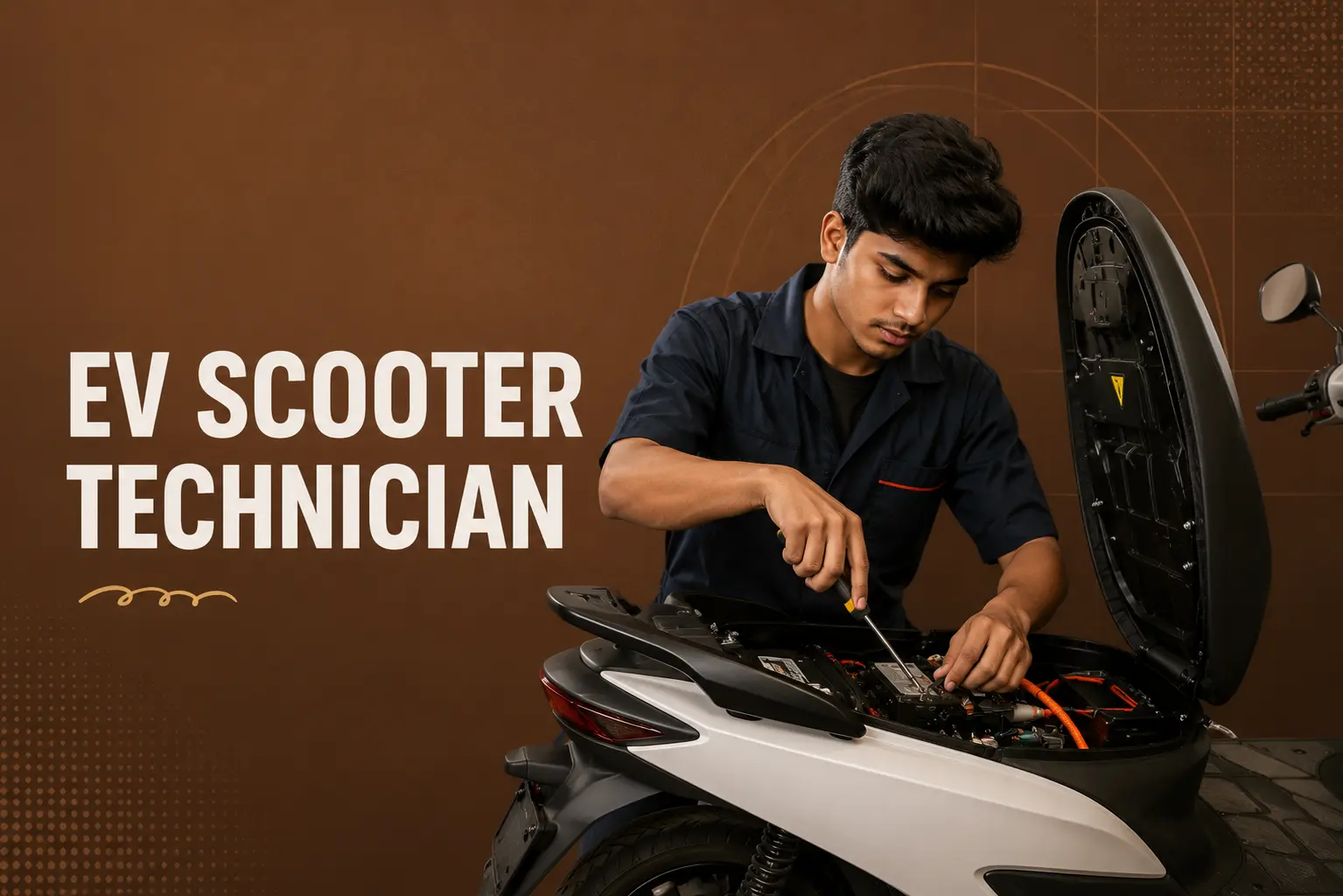
TCoE Electric Scooter Repairing Course provides hands-on training in electric scooter servicing, maintenance, diagnostics, and repair, covering batteries, motors, controllers, charging systems, and EV safety.

Course Stats
4.5
245+ Course Reviews
Courses Hands-On Training
Languages English | हिन्दी
Career Placement Assistance

About Course

The Electric Scooter Repairing Course is a 72-hour practical training program designed to develop job-ready skills in electric scooter assembly, servicing, troubleshooting, maintenance, and repair. The program combines electrical, electronic, and mechanical training with hands-on workshop practice to help learners confidently work with modern EV scooter systems.

Learners gain practical knowledge of electric mobility, EV powertrains, BLDC motors, controllers, throttles, sensors, displays, lithium-ion batteries, BMS, charging systems, wiring, safety circuits, brakes, suspension, wheels, and other essential scooter components.

What you'll learn

Course Content

Details to know

EV Scooter Technician Course

₹12,000

₹13,500
Discount 11% off

Course Highlights -

Success Stories from Our Learners

Join TCoE and gain practical knowledge, industry-recognized expertise, and the confidence to achieve your career goals.

Aksha Chaha
Aksha Chaha
MSC, RU
EV course gave me a clear understanding of electric vehicles, batteries, and charging systems. The practical training made learning much easier.

Mitansh Gupta
Mitansh Gupta
B.Tech, Mumbai
I really enjoyed the hands-on EV training. It helped me understand the technology and gave me confidence to explore a career in the EV industry.

Raja Subramania Iyer
M.Tech, University of Kerala
மின்சார வாகனங்கள் (EV) குறித்த பயிற்சி வகுப்பு ஒரு சிறந்த கற்றல் அனுபவமாக அமைந்தது. வகுப்பறையில் கற்ற கோட்பாடுகளை, நிஜ உலகில் மின்சார வாகனங்களின் பயன்பாடுகளுடன் தொடர்புபடுத்திப் புரிந்துகொள்ள செய்முறைப் பயிற்சிகள் எனக்கு உதவின.

Ashwani
Ashwani
BE, College of Bikaner
I gained valuable technical knowledge through this course. It is a good starting point for students who want to build a career in electric mobility.

Hands-On Electric Scooter Repair Training

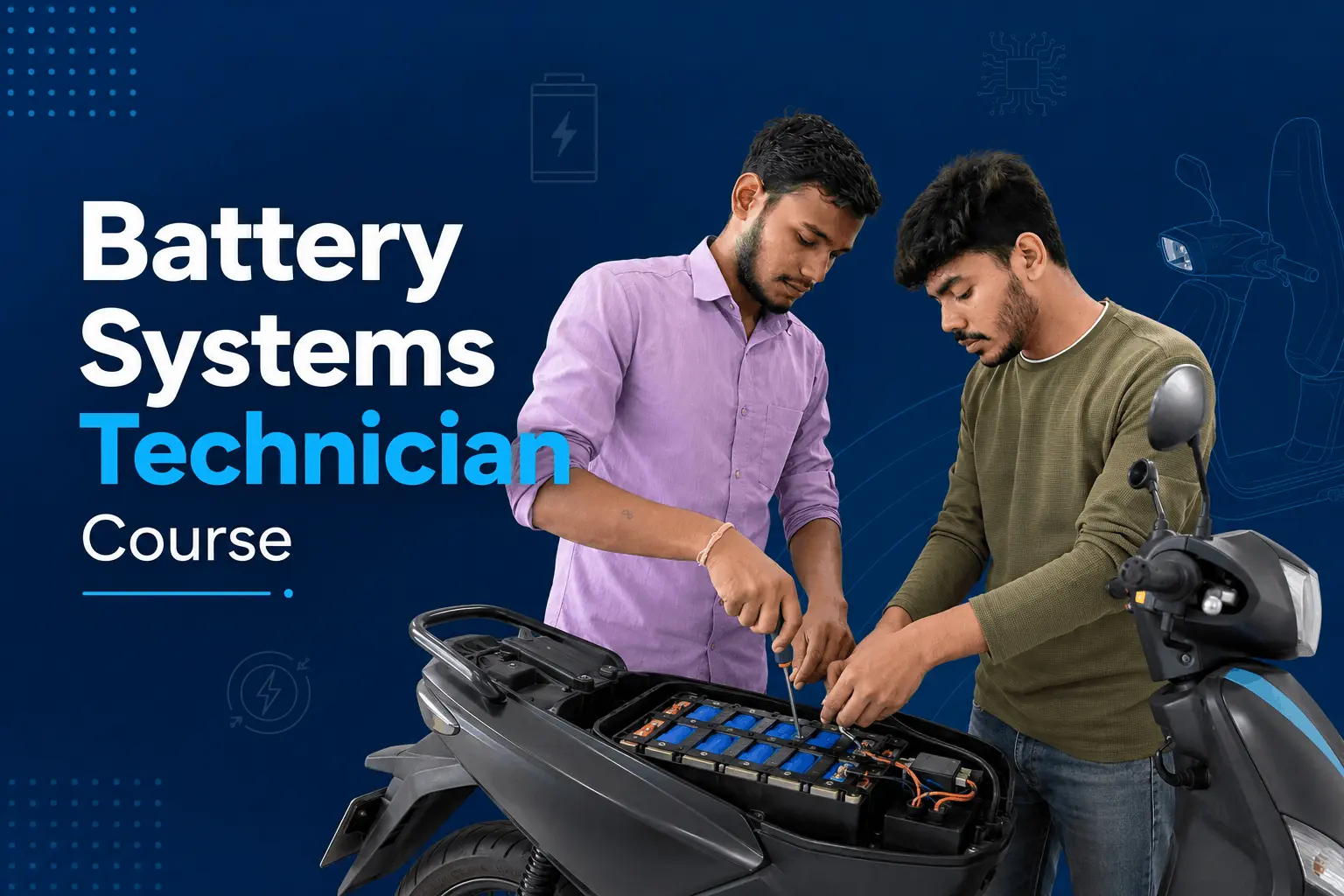
Practical workshops are an important part of the electric scooter repair training. Learners work on tasks such as motor and controller testing, battery evaluation, wiring harness inspection and repair, charging-system checks, brake and suspension servicing, scooter assembly, and fault diagnosis.

TCoE hands-on approach helps learners connect technical concepts with real workshop situations and develop the confidence needed for routine electric scooter servicing and troubleshooting.

Career Opportunities

After completing the program, participants can apply their skills to entry-level roles involving electric scooter servicing, maintenance, diagnostics, and repair. Potential roles include EV Scooter Technician, E-Mobility Service Technician, and Workshop Technician in EV service centers, startups, rental businesses, fleet operations, and related mobility companies.

The course is also useful for learners looking for broader electric vehicle repair training or an electric bike repair course, as many core EV service skills such as battery inspection, motor testing, controller diagnosis, wiring, and safety procedures are transferable across electric two-wheelers.

Frequently Asked Questions

Students, graduates, working professionals, entrepreneurs, and drone enthusiasts can enroll, subject to the eligibility requirements of the selected course.

No. Most beginner and intermediate courses do not require previous experience.

Eligibility varies by course. Please refer to the individual course page for the specific academic requirements.

Yes. Engineering, diploma, and ITI students can enroll to build practical drone technology skills.

Absolutely. Flexible learning options allow working professionals to upgrade their skills without interrupting their careers.

Our drone courses combine theoretical concepts with extensive hands-on practical training to help learners develop real-world skills.

Yes. Depending on the course, you’ll gain practical experience in drone assembly, servicing, maintenance, simulation, and flight operations.

Yes. Most courses start with the fundamentals and gradually progress to advanced concepts, making them suitable for beginners and professionals alike.

You’ll learn drone technology, safety procedures, troubleshooting, maintenance, flight operations, and industry best practices relevant to your chosen course.

Online courses focus on theoretical knowledge, while practical sessions may vary depending on the specific course and training format.

Yes. Eligible learners receive a course completion certificate after successfully meeting the course requirements.

Certification depends on the specific course. Several TechnosCOE drone programs include industry-recognized certifications such as ESSCI where applicable.

Yes. Online learners can complete eligible courses at their own pace within the provided access period.

Most courses are available in English and Hindi.

Course duration varies by program, ranging from a few weeks to several months.

Yes. Online learners can complete eligible courses at their own pace within the provided access period.

Most courses are available in English and Hindi.

Training schedules vary by batch and course mode. Please contact our team for the latest batch timings.

You will receive continuous support from experienced instructors through live doubt-clearing sessions, practical guidance, assignments, and technical discussions to help you succeed throughout the course.

Yes. Learners can reach out to instructors during designated doubt-clearing sessions or through the institute’s communication channels for additional guidance.

Yes. Instructors provide guidance throughout the project lifecycle, including project selection, implementation, debugging, testing, and documentation.

Yes. The support team assists learners with installing development tools, configuring software, and resolving basic hardware setup issues required for the course.

You can contact the support team through the institute’s official communication channels, such as email, phone, live chat, or the student support portal. The support team is available to assist with course-related queries, technical issues, and administrative requests.