
Solar PV Electrical Engineer (Rooftop On-grid and Off-grid) Course
The Solar PV Electrical Engineer (Rooftop On-grid and Off-grid) Course is a hands-on program designed to train learners in the installation, commissioning, and basic maintenance of solar photovoltaic (PV) panels. It covers site assessment, panel mounting, electrical connections, safety procedures, and troubleshooting techniques. Through practical exercises, participants gain real-world experience in making PV systems operational and efficient. This course prepares learners for job-ready roles in the expanding solar energy sector, supporting the deployment of clean and sustainable power solutions.
About Course
The Solar PV Electrical Engineer (Rooftop On-grid and Off-grid) Course is a 108 hours practical training program.
It is designed to prepare learners for the complete mechanical and electrical installation of solar photovoltaic (PV) panels in residential, commercial, and small industrial setups. The course blends essential theory with extensive field practice, enabling learners to safely and accurately install solar panels while following industry and MNRE standards.
Through structured modules, participants learn:
– Basics of solar energy and PV technology
– Types of solar panels and selection criteria
– Tools, safety gear, and installation best practices
– Panel handling, positioning, tilt angle, and orientation
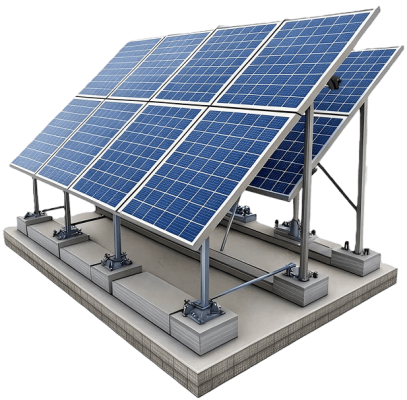
– Mechanical mounting on rooftop, RCC, tin-shed, and ground structures
– DC electrical wiring, cable routing, MC4 connectors, and string formation
– Earthing, surge protection, and safety compliance
– System testing, troubleshooting, and documentation
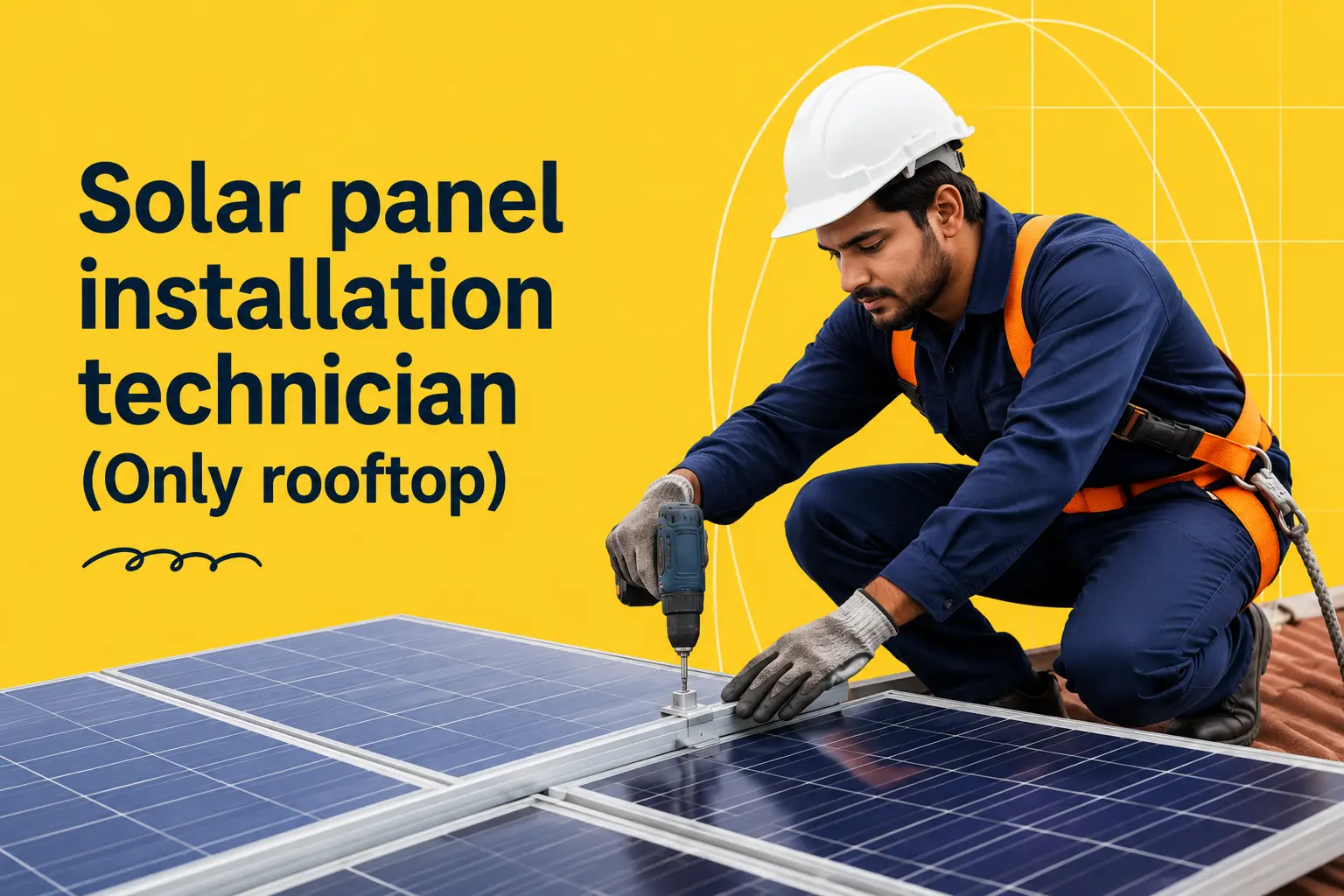
Hands-on sessions include panel alignment, clamping, drilling, wiring, torque application, continuity testing, insulation testing, and verifying correct panel string configuration. Trainees also learn pre-installation site assessment, layout planning, and basic interaction with inverters and charge controllers.
By the end of the program, participants are prepared to:
– perform complete solar panel installation and wiring,
– assist in PV system commissioning and maintenance, and
– work as Solar Installation Technicians, Field Installers, or Solar Maintenance Assistants across renewable energy projects.
This course provides essential knowledge and practical training to build industry-relevant skills.
- Online Course Fees: ₹3,000, ₹1,841 (incl. GST) (Excluding tools & equipment cost)
- Offline Course Fees: ₹18,000, ₹16,638 (incl. GST) (Excluding tools & equipment cost)
- Certification: TCoE
- Duration: 108 Hours (2 hours/day x 6 days/week x 9 weeks) OR at your own pace
What you'll learn
- Basics of Solar Energy & PV Technology: Understand how solar energy works, types of solar PV systems, key components, and fundamental electrical concepts.Basics of Solar Energy: Understand how solar power works, including energy conversion, solar radiation, and PV system principles.
- Site Assessment & Solar Potential Analysis: Learn to evaluate rooftops and open areas, check shading, calculate tilt/azimuth, and assess the feasibility of PV installation.
- PV Module Mounting & Structure Assembly: Gain hands-on skills in mounting solar panels, assembling module structures, and ensuring correct mechanical alignment.
- Electrical Wiring & System Integration: Learn to connect modules, inverters, junction boxes, cables, and protective devices following safety and quality standards.
- Installation of Inverters & BOS Components: Understand how to install, configure, and test inverters, earthing systems, surge protection devices, and other Balance-of-System parts.
- Testing, Commissioning & Troubleshooting: Develop skills in using testing tools, identifying installation faults, performing system checks, and ensuring proper commissioning.
- Safety Practices & Quality Standards: Get trained in electrical and working-at-height safety, PPE usage, fire safety, and adherence to MNRE/IS standards and guidelines.
- Operation, Maintenance & Customer Support: Learn routine maintenance tasks, cleaning procedures, documentation, and how to guide customers on system usage and performance.
Course Content
Mostly practical training from the first day.
₹1,841
₹3,000
Discount 39% off
Benefits Obtained :
- 9 weeks
- 12 Hours / Week
- Basic & Intermediate
- Hindi, English
- Learn & Get Certified
Related Course
Success Stories from Our Learners
Join TCoE and gain practical knowledge, industry-recognized expertise, and the confidence to achieve your career goals.
Why Learn Solar Panel Installation?
The Solar Panel Installation course is designed to equip learners with the practical skills and technical knowledge required to install, commission, and maintain solar photovoltaic (PV) systems. As the global demand for clean and renewable energy continues to grow, solar power has become one of the most widely adopted energy solutions for residential, commercial, industrial, and utility-scale applications.
With governments and businesses investing heavily in renewable energy, there is an increasing need for qualified professionals who can safely and efficiently install solar panel systems. This course provides hands-on training in solar panel installation, electrical connections, system testing, troubleshooting, and maintenance, preparing learners for real-world job opportunities in the solar energy industry.
Throughout the course, you will learn the fundamentals of solar energy, photovoltaic technology, system components, installation techniques, wiring practices, safety standards, and performance evaluation. Practical sessions and industry-based projects help you develop the confidence and experience needed to work on live solar installations.
By enrolling in this course, you will:
- Understand the fundamentals of solar energy and photovoltaic (PV) systems.
- Learn how to install rooftop and ground-mounted solar panel systems.
- Gain practical experience in solar panel mounting, wiring, and electrical connections.
- Understand the operation of inverters, batteries, charge controllers, and other system components.
- Learn solar system commissioning, testing, and performance verification.
- Develop troubleshooting and preventive maintenance skills.
- Follow industry-standard electrical and workplace safety practices.
- Work on hands-on installation projects and practical demonstrations.
- Build the technical skills required for residential, commercial, and industrial solar installations.
- Prepare for employment in the growing renewable energy and solar power sector.
This course is ideal for engineering students, diploma holders, electricians, technicians, fresh graduates, entrepreneurs, and working professionals who want to develop practical expertise in solar panel installation and renewable energy systems.
Career Opportunities
After completing the Solar Panel Installation course, you can pursue roles such as:
- Solar Panel Installation Technician
- Solar PV Installer
- Solar Installation Engineer
- Solar Service Technician
- Solar Maintenance Technician
- Solar Project Technician
- Renewable Energy Technician
- Solar Site Supervisor
- Solar Operations & Maintenance (O&M) Technician
- Field Service Engineer – Solar
Solar installation professionals are in demand across solar EPC companies, renewable energy firms, electrical contractors, construction companies, solar equipment manufacturers, government renewable energy projects, commercial and residential installation providers, and utility-scale solar power plants.
Whether you are beginning a career in renewable energy or looking to enhance your technical skills, the Solar Panel Installation course provides the practical training, industry knowledge, and hands-on experience needed to build a successful career in the rapidly expanding solar energy industry.
Frequently Asked Questions
Q1. Who is eligible to join this course?
Students, graduates, working professionals, entrepreneurs, and drone enthusiasts can enroll, subject to the eligibility requirements of the selected course.
Q2. Do I need prior experience?
No. Most beginner and intermediate courses do not require previous experience.
Q3. What is the minimum educational qualification?
Eligibility varies by course. Please refer to the individual course page for the specific academic requirements.
Q4. Can engineering and diploma students join?
Yes. Engineering, diploma, and ITI students can enroll to build practical drone technology skills.
Q5. Can working professionals attend the course?
Absolutely. Flexible learning options allow working professionals to upgrade their skills without interrupting their careers.
Q1. Is this course practical or theory-based?
Our drone courses combine theoretical concepts with extensive hands-on practical training to help learners develop real-world skills.
Q2. Will I work with actual drones during the course?
Yes. Depending on the course, you’ll gain practical experience in drone assembly, servicing, maintenance, simulation, and flight operations.
Q3. Are the courses suitable for beginners?
Yes. Most courses start with the fundamentals and gradually progress to advanced concepts, making them suitable for beginners and professionals alike.
Q4. What skills will I gain after completing the training?
You’ll learn drone technology, safety procedures, troubleshooting, maintenance, flight operations, and industry best practices relevant to your chosen course.
Q5. Is hands-on training included in online courses?
Online courses focus on theoretical knowledge, while practical sessions may vary depending on the specific course and training format.
Q1. Will I receive a certificate after completing the course?
Yes. Eligible learners receive a course completion certificate after successfully meeting the course requirements.
Q2. Is the certificate recognized by the industry?
Certification depends on the specific course. Several TechnosCOE drone programs include industry-recognized certifications such as ESSCI where applicable.
Q3. Do I need to pass an assessment to earn the certificate?
Yes. Online learners can complete eligible courses at their own pace within the provided access period.
Q4. Can I use the certificate while applying for jobs?
Most courses are available in English and Hindi.
Q1. How long does the course take to complete?
Course duration varies by program, ranging from a few weeks to several months.
Q2. Can I learn at my own pace?
Yes. Online learners can complete eligible courses at their own pace within the provided access period.
Q3. What languages are the courses available in?
Most courses are available in English and Hindi.
Q4. Are weekend or flexible schedules available?
Training schedules vary by batch and course mode. Please contact our team for the latest batch timings.
Q1. What kind of support will I receive during the course?
You will receive continuous support from experienced instructors through live doubt-clearing sessions, practical guidance, assignments, and technical discussions to help you succeed throughout the course.
Q2. Can I contact the instructor if I have doubts after class?
Yes. Learners can reach out to instructors during designated doubt-clearing sessions or through the institute’s communication channels for additional guidance.
Q3. Will I receive support for course projects?
Yes. Instructors provide guidance throughout the project lifecycle, including project selection, implementation, debugging, testing, and documentation.
Q4. Is technical support available if I face issues with software or hardware setup?
Yes. The support team assists learners with installing development tools, configuring software, and resolving basic hardware setup issues required for the course.
Q5. How can I contact the support team for further assistance?
You can contact the support team through the institute’s official communication channels, such as email, phone, live chat, or the student support portal. The support team is available to assist with course-related queries, technical issues, and administrative requests.