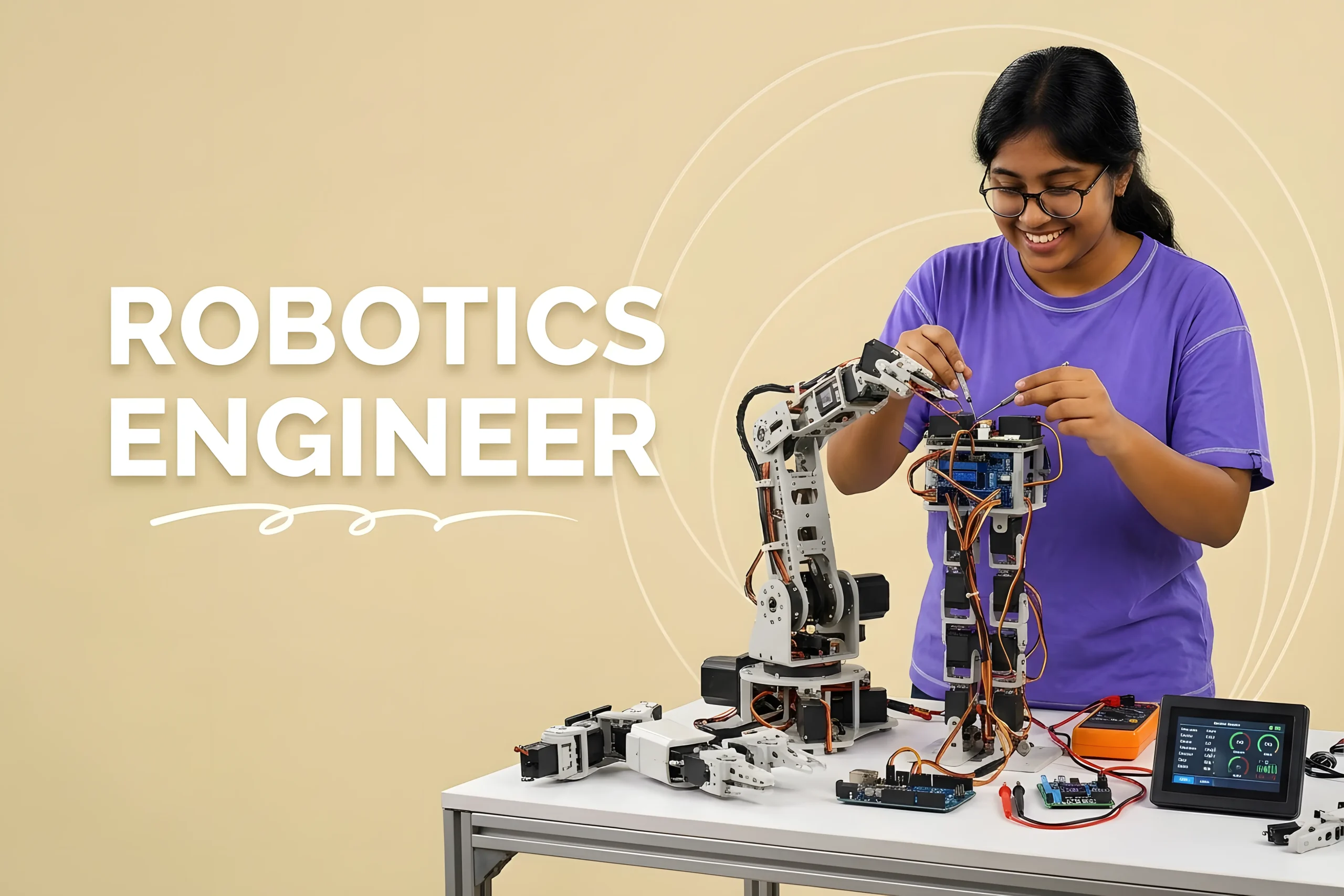

Robotics Engineer Course: Level-2
The Robotics Engineer Course: Level-2 is a comprehensive program designed for learners who want to deepen their expertise in intelligent and autonomous robotic systems. The course covers advanced robotics concepts such as robot kinematics and dynamics, control systems, embedded programming, sensors and vision systems, and AI-enabled decision making. Through hands-on projects, simulations, and real-world case studies, learners gain practical experience in designing, integrating, and optimizing complex robotic solutions. This course prepares participants for professional roles in robotics, automation, and Industry 4.0 applications, and serves as a strong pathway to R&D and high-end engineering careers.
About Course
The Robotics Engineer Level-2 Course is a 72-hour introductory training program.
It is designed to introduce learners to the core principles, components, and practical applications of robotics.
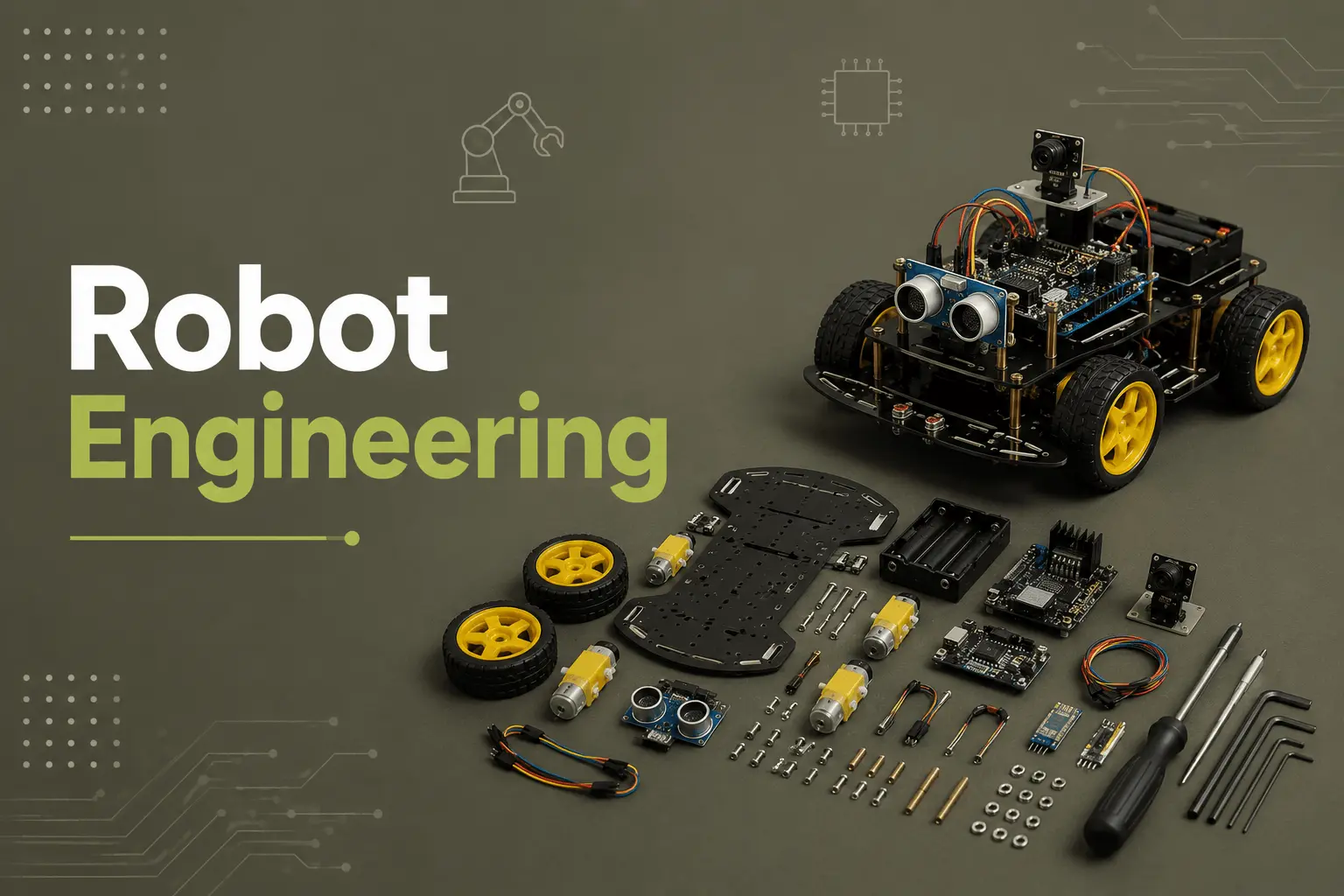
Through a blend of theory and hands-on activities, learners gain foundational knowledge of electronic components, circuits, sensors, motors, logic gates, and robot mechanisms, while building and troubleshooting multiple robot models on hardware and digital platforms.
The course further develops skills in robot assembly, testing, maintenance, documentation, and Arduino-based programming, enabling learners to construct functional robots such as:
– pick and place robot
– maze solving robot
By the end of the program, participants are equipped to:
– assist in robotics labs,
– support technical operations and
– work as robotics assistant technicians
This course provides essential knowledge and practical training to build industry-relevant skills.
- Online Course Fees: ₹3500, ₹1,876 (incl. GST) (Excluding tools & equipment cost)
- Offline Course Fees: ₹19,000, ₹16,992 (incl. GST) (Excluding tools & equipment cost)
- Certification: TCoE
- Duration: 108 Hours (2 hours/day x 6 days/week x 6 weeks) OR at your own pace
What you'll learn
- Advanced Robot Kinematics & Dynamics – Master forward/inverse kinematics, motion planning, multi-DOF control, and dynamic modelling for complex robotic systems.
- Robotic Operating System (ROS/ROS2) – Develop, integrate, and manage advanced robotic applications using ROS frameworks, nodes, topics, services, and real-time communication.
- AI-Driven Robotics – Implement machine learning and computer vision algorithms for autonomous navigation, object detection, and intelligent decision-making.
- Embedded Systems & Real-Time Control – Work with microcontrollers, real-time OS, motor drivers, sensors, and high-precision feedback control loops.
- Autonomous Systems & Path Planning – Learn SLAM, LiDAR integration, GPS-based navigation, and multi-robot coordination techniques.
- Industrial Robotics & Automation – Program industrial robotic arms (like ABB, FANUC, KUKA) and integrate PLCs, actuators, and automation workflows.
- Advanced Mechatronics Integration – Build robust robotic prototypes using mechanical design, power electronics, actuator selection, and system-level testing.
- Simulation & Digital Twins – Use Gazebo, MATLAB, or other simulation environments to design, test, and optimize robots before physical implementation.
Course Content
Hands-on practical sessions begin from the first day.
₹1,876
₹3,000
Discount 37.5% off
Benefits Obtained :
- 9 weeks
- 12 Hours / Week
- Basic & Intermediate
- Hindi, English
- Learn & Get Certified
Related Course
Success Stories from Our Learners
Join TCoE and gain practical knowledge, industry-recognized expertise, and the confidence to achieve your career goals.
Why Learn Robotics?
The Robotics Engineer: Level-2 course is designed to introduce learners to the exciting field of robotics by building a strong foundation in robot design, programming, electronics, sensors, actuators, and automation. Robotics combines multiple disciplines—including mechanical engineering, electronics, computer science, artificial intelligence, and embedded systems—to create intelligent machines capable of performing real-world tasks with precision and efficiency.
As robotics continues to revolutionize industries such as manufacturing, healthcare, logistics, agriculture, defense, and autonomous systems, the demand for skilled robotics professionals is rapidly increasing. This course provides the essential knowledge and hands-on experience needed to begin a successful career in robotics and automation.
Throughout the course, learners will explore the fundamentals of robotic systems, including microcontrollers, motor control, sensors, actuators, control systems, embedded programming, and robot communication. Through practical labs and project-based learning, students will gain experience in building, programming, and testing robotic applications.
By enrolling in this course, you will:
- Build a strong foundation in robotics and automation concepts.
- Learn the basics of robot design, components, and system architecture.
- Understand how sensors, actuators, and motors work in robotic systems.
- Develop programming skills for controlling robotic devices.
- Gain hands-on experience with embedded systems and microcontrollers.
- Learn motor control techniques and hardware interfacing.
- Explore robot navigation, control, and communication fundamentals.
- Work on practical robotics projects to strengthen your technical skills.
- Develop problem-solving and debugging skills for real-world robotic applications.
- Prepare for advanced robotics, AI, IoT, and automation technologies.
This course is ideal for engineering students, diploma holders, fresh graduates, hobbyists, and working professionals from Electronics, Electrical, Mechanical, Mechatronics, Computer Science, Robotics, Automation, and related disciplines who want to begin their journey in robotics.
Career Opportunities
After completing the Robotics Engineer: Level-2 course, you can pursue roles such as:
- Robotics Engineer
- Robotics Programmer
- Automation Engineer
- Robotics Technician
- Embedded Systems Engineer
- Mechatronics Engineer
- Industrial Automation Engineer
- Robot Integration Engineer
- Robotics Support Engineer
- IoT & Robotics Developer
Robotics professionals are in high demand across industries including industrial automation, automotive, healthcare, logistics, aerospace, agriculture, consumer electronics, research and development, defense, and smart manufacturing.
Whether you are looking to build your first robot, develop intelligent automation systems, or establish a career in robotics, the Robotics Engineer: Level-2 course provides the essential technical foundation, practical experience, and industry-relevant skills needed to succeed in this rapidly evolving field.
Frequently Asked Questions
Q1. Who is eligible to join this course?
Students, graduates, working professionals, entrepreneurs, and drone enthusiasts can enroll, subject to the eligibility requirements of the selected course.
Q2. Do I need prior experience?
No. Most beginner and intermediate courses do not require previous drone experience.
Q3. What is the minimum educational qualification?
Eligibility varies by course. Please refer to the individual course page for the specific academic requirements.
Q4. Can engineering and diploma students join?
Yes. Engineering, diploma, and ITI students can enroll to build practical drone technology skills.
Q5. Can working professionals attend the course?
Absolutely. Flexible learning options allow working professionals to upgrade their skills without interrupting their careers.
Q1. Is this course practical or theory-based?
Our courses combine theoretical concepts with extensive hands-on practical training to help learners develop real-world skills.
Q2. Will I work with actual robots during the course?
Yes. Depending on the course, you’ll gain practical experience in robotics assembly, servicing, maintenance, simulation, and programming, etc.
Q3. Are the courses suitable for beginners?
Yes. Most courses start with the fundamentals and gradually progress to advanced concepts, making them suitable for beginners and professionals alike.
Q4. What skills will I gain after completing the training?
The course focuses on advanced robotics concepts, including:
- Advanced robot programming
- Embedded systems integration
- Sensor fusion and interfacing
- Motor control and drive systems
- Robotic navigation and motion control
- Wireless communication for robots
- Industrial automation fundamentals
- Robot debugging and troubleshooting
- AI and IoT integration basics
- Real-world robotics project development
Q5. Is hands-on training included in online courses?
Online courses focus on theoretical knowledge, while practical sessions may vary depending on the specific course and training format.
Q1. Will I receive a certificate after completing the course?
Yes. Eligible learners receive a course completion certificate after successfully meeting the course requirements.
Q2. Is the certificate recognized by the industry?
Certification depends on the specific course. Several TechnosCOE drone programs include industry-recognized certifications such as ESSCI where applicable.
Q3. Do I need to pass an assessment to earn the certificate?
Yes. Online learners can complete eligible courses at their own pace within the provided access period.
Q4. Can I use the certificate while applying for jobs?
Most courses are available in English and Hindi.
Q1. How long does the course take to complete?
Course duration varies by program, ranging from a few weeks to several months.
Q2. Can I learn at my own pace?
Yes. Online learners can complete eligible courses at their own pace within the provided access period.
Q3. What languages are the courses available in?
Most courses are available in English and Hindi.
Q4. Are weekend or flexible schedules available?
Training schedules vary by batch and course mode. Please contact our team for the latest batch timings.
Q1. What kind of support will I receive during the course?
You will receive continuous support from experienced instructors through live doubt-clearing sessions, practical guidance, assignments, and technical discussions to help you succeed throughout the course.
Q2. Can I contact the instructor if I have doubts after class?
Yes. Learners can reach out to instructors during designated doubt-clearing sessions or through the institute’s communication channels for additional guidance.
Q3. Will I receive support for course projects?
Yes. Instructors provide guidance throughout the project lifecycle, including project selection, implementation, debugging, testing, and documentation.
Q4. Is technical support available if I face issues with software or hardware setup?
Yes. The support team assists learners with installing development tools, configuring software, and resolving basic hardware setup issues required for the course.
Q5. How can I contact the support team for further assistance?
You can contact the support team through the institute’s official communication channels, such as email, phone, live chat, or the student support portal. The support team is available to assist with course-related queries, technical issues, and administrative requests.