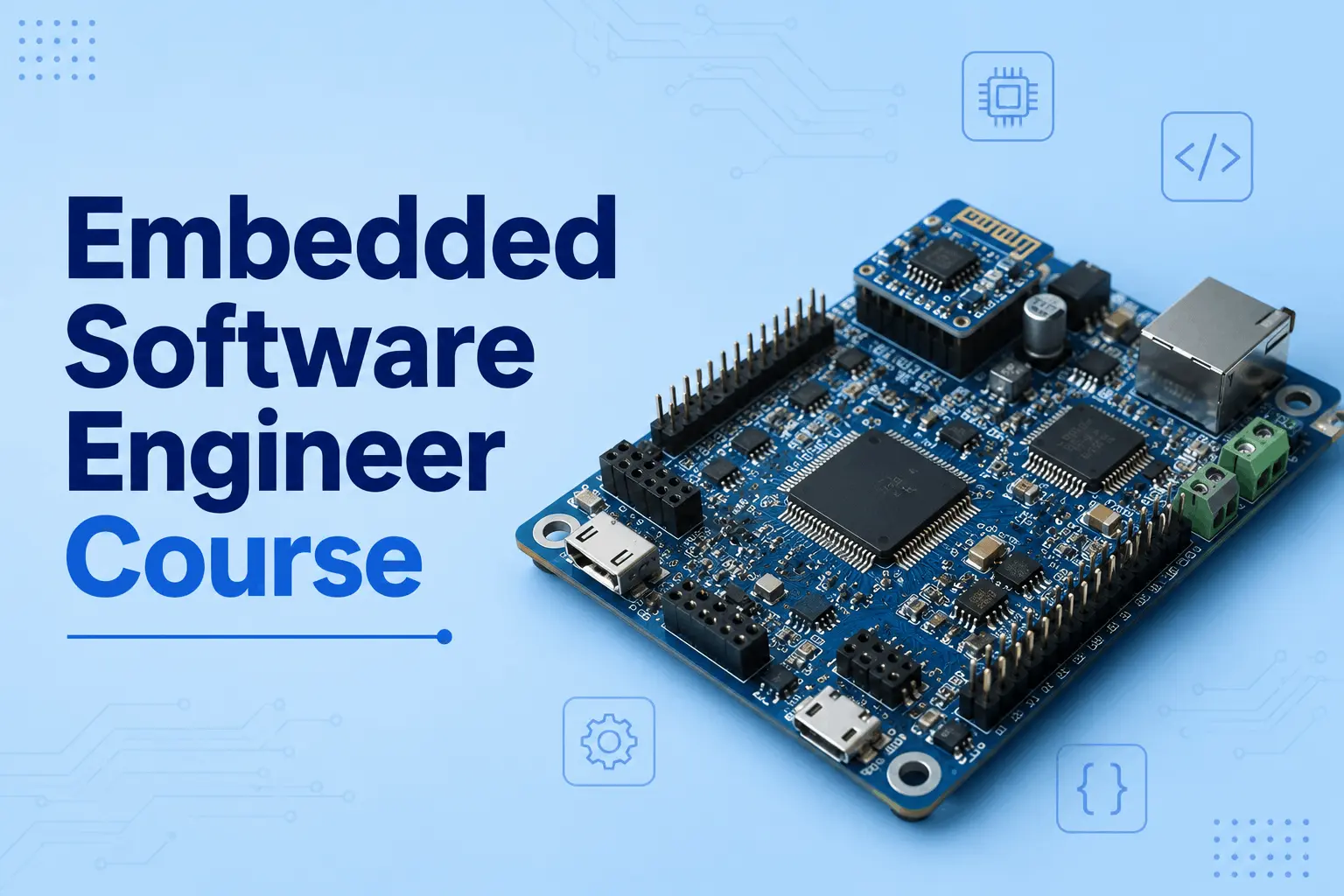

Embedded Software Engineer Course

Step into the world where hardware meets software! The Embedded Software Engineer Course empowers you to design, program, and control smart devices that drive modern technology — from IoT gadgets to autonomous systems.

Course Stats
4.4
125+ course reviews
Courses Hands-On Training
Languages English | हिन्दी
Career Placement Assistance

About Course

Embedded Software Engineer Course introduces the principles and practices of designing software for embedded systems that power everyday devices. The course covers microcontrollers, real-time operating systems, programming in C/C++, hardware-software integration, and debugging techniques. Students will gain hands-on experience in developing efficient, reliable, and optimized software solutions for applications in automotive systems, consumer electronics, IoT devices, and industrial automation.

Gain hands-on skills in embedded C programming, microcontroller interfacing, and real-time systems. Ideal for students aiming for careers in automation, robotics, or smart device development.

This Embedded Software Engineer training provides essential knowledge and practical training to build industry-relevant skills.

  • Online Course Fees: ₹5000 ₹2,649 (incl. GST) (Excluding tools & equipment cost)
  • Offline Course Fees: ₹28000 ₹24,131 (incl. GST) (Excluding tools & equipment cost)
  • Certification: ESSCI
  • Duration: 570 Hours (6 hours/day x 5 days/week x 19 weeks) OR at your own pace
  • Minimum Educational Qualification & Experience: Completed 2nd year of UG (UG Diploma) (Physics/Electronics/ Electrical/Computer Science) with 1.5 years of Relevant Experience Completed 3 year diploma after 10th (Electronics/Electrical/ Computer Science) with 3 Years of Relevant Experience OR Previous relevant Qualification of NSQF Level (4.5) with 1.5 years of Relevant Experience # Relevant Experience in Semiconductor & Components.

What you'll learn

Course Content

  • Demonstrate the process of developing embedded system software.
  • Explain the importance of following inclusive practices for all genders and PwD at work.
  • Demonstrate various practices to be followed to maintain health and safety at work.
  • Describe the process of identifying the work requirement.
  • Demonstrate the process of identifying the embedded system design specifications.
  • Demonstrate the process of developing software for embedded system.
  • Explain the importance of completing documentation.
  • Understand the development procedure and documentation process.
  • Understand the development procedure and documentation process.
  • Discuss about Employability Skills in meeting the job requirements.
  • Describe opportunities as an entrepreneur.
  • Describe ways of preparing for apprenticeship & Jobs appropriately.
  1. Interacting with the lead engineer for understanding the work schedules, shifts and
    delivery dates.
  2. Complying with organization’s policies, procedures and guidelines when developing
    embedded system software codes.
  3. Interacting with the lead engineer and embedded system design engineers.
  4. Creating a software design for the embedded system.
  5. Creating the software modules to meet the requirements of the software.
  6. Testing, verification and debugging of software codes for any errors and submitting the
    tested codes and documents for approval.
  7. Creating documents related to design using standard templates and agreed language
    standards.
  8. Communicating effectively at the workplace.
  9. Applying health and safety practices at the workplace.
DSC 4918 scaled

₹2,649

₹5,000
Discount 47% off

Benefits Obtained:

Success Stories from Our Learners

Join TCoE and gain practical knowledge, industry-recognized expertise, and the confidence to achieve your career goals.

Archisha Ahuja
Archisha Ahuja
B. Tech., IIT-Kharagpur
The Agricultural Drone Technology course was truly eye-opening! I learned how drones can transform farming by improving crop monitoring, reducing effort, and increasing productivity. The hands-on training gave me practical skills to operate and manage drones with confidence.
Aashman Gupta
Aashman Gupta
B. Des. Mumbai
The 3-D Printing and Drone Training course was awesome for me! I came in with only basic technical knowledge, but the hands-on approach made it easy to learn complex concepts. Designing and printing real models gave me the confidence to turn ideas into reality, while the drone training opened up exciting opportunities.
Shrishti
Shrishti
B. Tech., Amity University, Jaipur
The Raman Spectroscopy course gave me the knowledge of theory and practice. Hands-on training on Raman spectroscopy gave me an understanding the real-world applications. I now feel confident in applying Raman techniques for real research and innovation.

Aryan Gupta
Aryan Gupta
B. Sc. Physics, Netherlands
The IoT course transformed my understanding of technology! I never imagined I could connect devices, work with sensors, and create smart solutions so easily. The practical approach and step-by-step guidance made learning enjoyable and gave me skills that are truly future-ready.

Why Learn Embedded Systems?

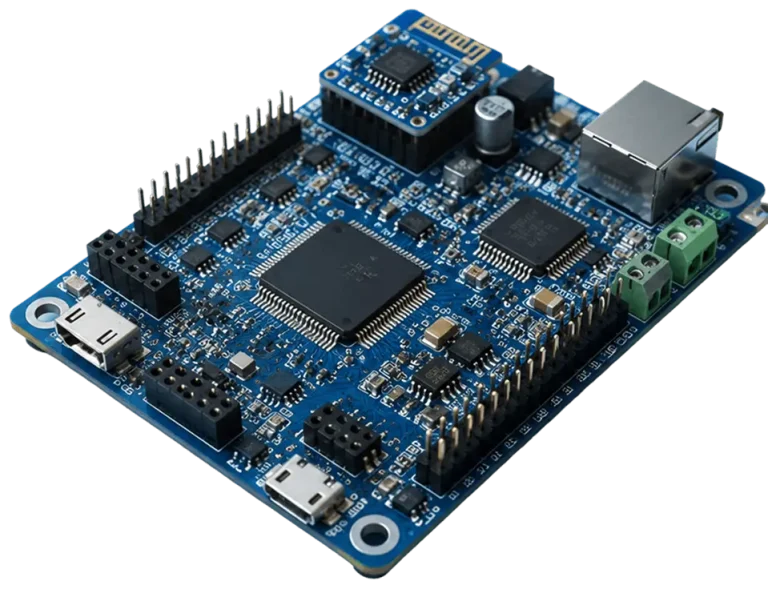
Embedded Software Engineering is the foundation of modern smart devices, powering everything from smartphones and wearable gadgets to automobiles, medical equipment, industrial automation, robotics, and Internet of Things (IoT) systems. As industries continue to adopt intelligent and connected technologies, the demand for skilled embedded software engineers is growing rapidly.

This course is designed to provide a strong understanding of embedded systems, programming concepts, and real-time software development. Learners will gain practical experience in developing firmware, interfacing with hardware, and optimizing software for resource-constrained devices. The curriculum typically covers C/C++ programming, microcontrollers, embedded Linux, real-time operating systems (RTOS), communication protocols (UART, SPI, I2C, CAN), device drivers, debugging techniques, and hands-on project development.

DSC 0171

By enrolling in this course, you will:

  • Build a solid foundation in embedded software development.
  • Learn to program microcontrollers and embedded processors.
  • Develop real-world applications for IoT, automotive, consumer electronics, and industrial systems.
  • Gain hands-on experience with hardware-software integration.
  • Improve your problem-solving and debugging skills for embedded applications.
  • Prepare for industry-recognized roles such as Embedded Software Engineer, Firmware Engineer, IoT Developer, Automotive Software Engineer, and Embedded Systems Developer.

Whether you are a student, an electronics or computer engineering graduate, or a software professional looking to transition into embedded systems, this course equips you with the technical knowledge and practical skills needed to build innovative products and pursue a rewarding career in one of the fastest-growing technology domains.

Career Opportunities:

  • Embedded Software Engineer
  • Firmware Developer
  • Embedded Linux Developer
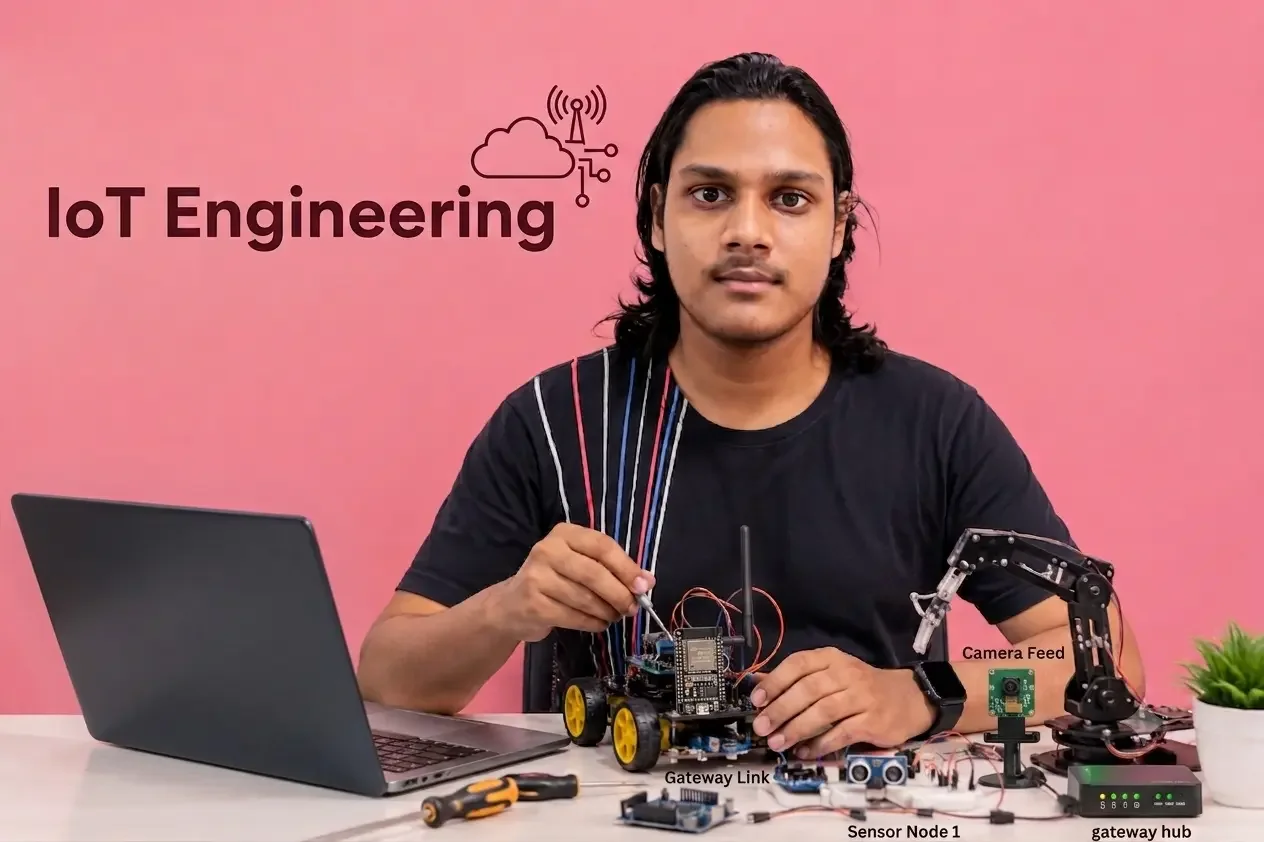
  • IoT Software Engineer
  • Automotive Embedded Engineer
  • Device Driver Developer
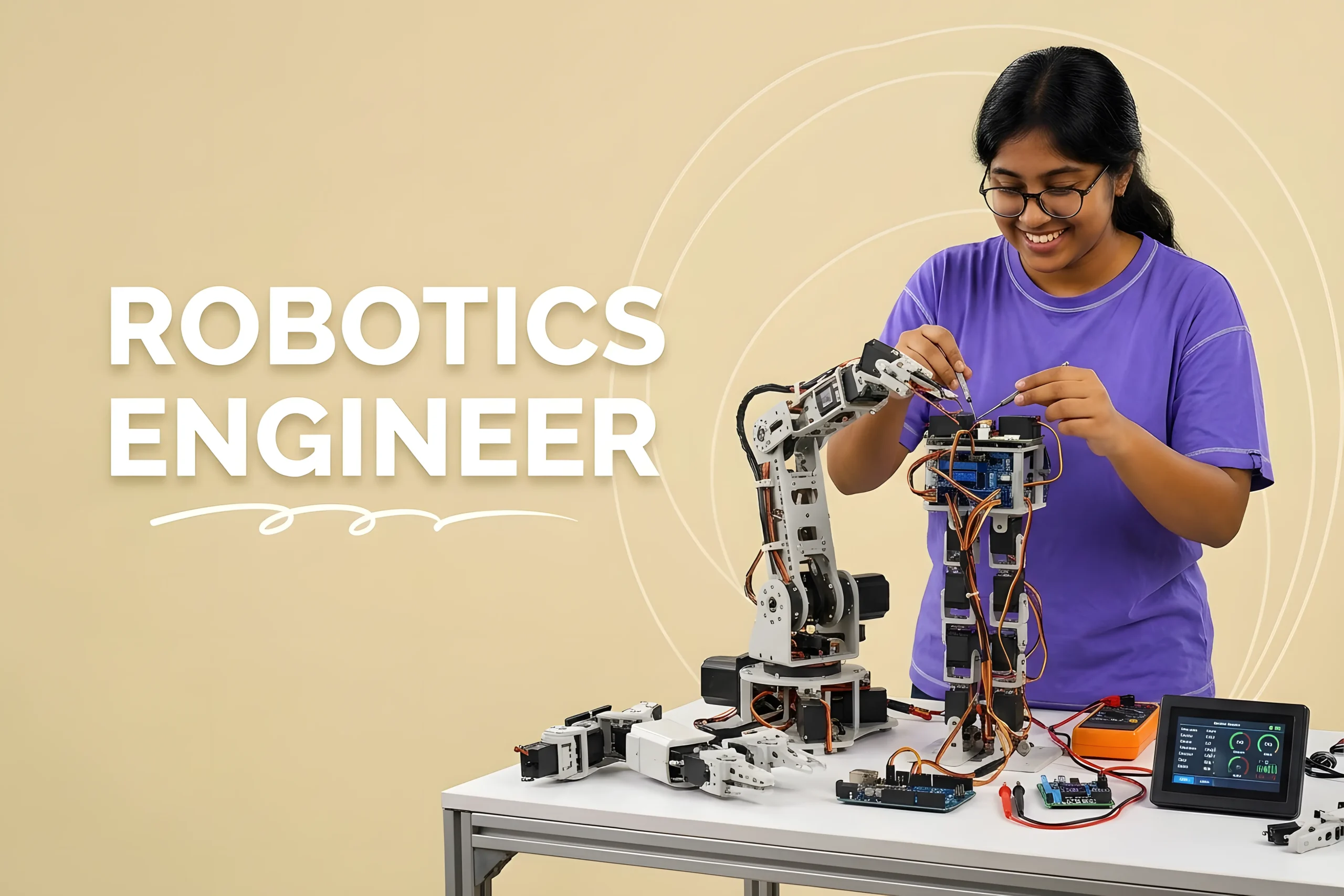
  • Robotics Software Engineer
  • Industrial Automation Engineer

With the increasing demand for smart and connected devices across industries, learning Embedded Software Engineering opens the door to exciting career opportunities, competitive salaries, and the chance to work on cutting-edge technologies that shape the future.

Frequently Asked Questions

By the end of the course, you will learn:

  • Embedded C and C++ programming
  • Microcontroller programming
  • Embedded Linux fundamentals
  • Real-Time Operating Systems (RTOS)
  • Communication protocols (UART, SPI, I2C, CAN)
  • Device driver basics
  • Firmware development and debugging
  • Hardware-software interfacing
  • IoT and embedded application development
  • Industry-standard tools and project development

These skills prepare you for real-world embedded software development.

No prior experience in embedded systems is required. However, having a basic understanding of programming concepts, computer fundamentals, and digital electronics can help you learn more quickly. The course starts with the fundamentals and gradually progresses to advanced topics.

After successfully completing the course, you can apply for roles such as:

  • Embedded Software Engineer
  • Firmware Engineer
  • Embedded Systems Developer
  • Embedded Linux Developer
  • IoT Developer
  • Automotive Embedded Engineer
  • Device Driver Developer
  • Robotics Software Engineer

Embedded software professionals are in demand across industries such as automotive, consumer electronics, medical devices, aerospace, industrial automation, telecommunications, and IoT.

Yes. The course emphasizes practical learning through hands-on labs, programming exercises, hardware interfacing, debugging sessions, and real-world projects. These projects help you gain industry-relevant experience, strengthen your portfolio, and improve your confidence for technical interviews and job opportunities.

The course primarily focuses on Embedded C, which is the industry standard for firmware development. It also introduces C++ concepts used in embedded applications.

The course duration is typically 6 months and is offline mode.

This course is available offline only and physical attendance is mandatory.

Absolutely. But attendance mandatory for this course.

6 hours per day and 5 days per week attendance is mandatory for this course.

Course duration varies by program, ranging from a few weeks to several months.

Yes. Online learners can complete eligible courses at their own pace within the provided access period.

Most courses are available in English and Hindi.

Training schedules vary by batch and course mode. Please contact our team for the latest batch timings.

You will receive continuous support from experienced instructors through live doubt-clearing sessions, practical guidance, assignments, and technical discussions to help you succeed throughout the course.

Yes. Learners can reach out to instructors during designated doubt-clearing sessions or through the institute’s communication channels for additional guidance.

Yes. Instructors provide guidance throughout the project lifecycle, including project selection, implementation, debugging, testing, and documentation.

Yes. The support team assists learners with installing development tools, configuring software, and resolving basic hardware setup issues required for the course.

You can contact the support team through the institute’s official communication channels, such as email, phone, live chat, or the student support portal. The support team is available to assist with course-related queries, technical issues, and administrative requests.

Completed 2nd year of UG (UG Diploma) (Physics/Electronics/ Electrical/Computer Science) with 1.5 years of Relevant Experience Completed 3 year diploma after 10th (Electronics/Electrical/ Computer Science) with 3 Years of Relevant Experience OR Previous relevant Qualification of NSQF Level (4.5) with 1.5 years of Relevant Experience # Relevant Experience in Semiconductor & Components.

This course is ideal for candidates from:

  • Electronics & Communication Engineering (ECE)
  • Electrical & Electronics Engineering (EEE)
  • Computer Science Engineering (CSE)
  • Information Technology (IT)
  • Electronics & Instrumentation (E&I)
  • Mechatronics
  • Robotics
  • Other related engineering or technical disciplines

Yes. Final-year engineering students are encouraged to enroll, as the course helps them develop industry-relevant skills and improve their placement opportunities before graduation.

Yes. Working professionals who wish to transition into embedded systems or enhance their existing technical skills can join the course. Flexible weekday, evening, and weekend batches are often available.

No. Prior programming experience is not mandatory. The course starts with the fundamentals of programming and gradually progresses to advanced embedded software concepts.